ANOMIE X SOUND PARTICLES inspired me to better architect my livestream production pipeline
TLDR:
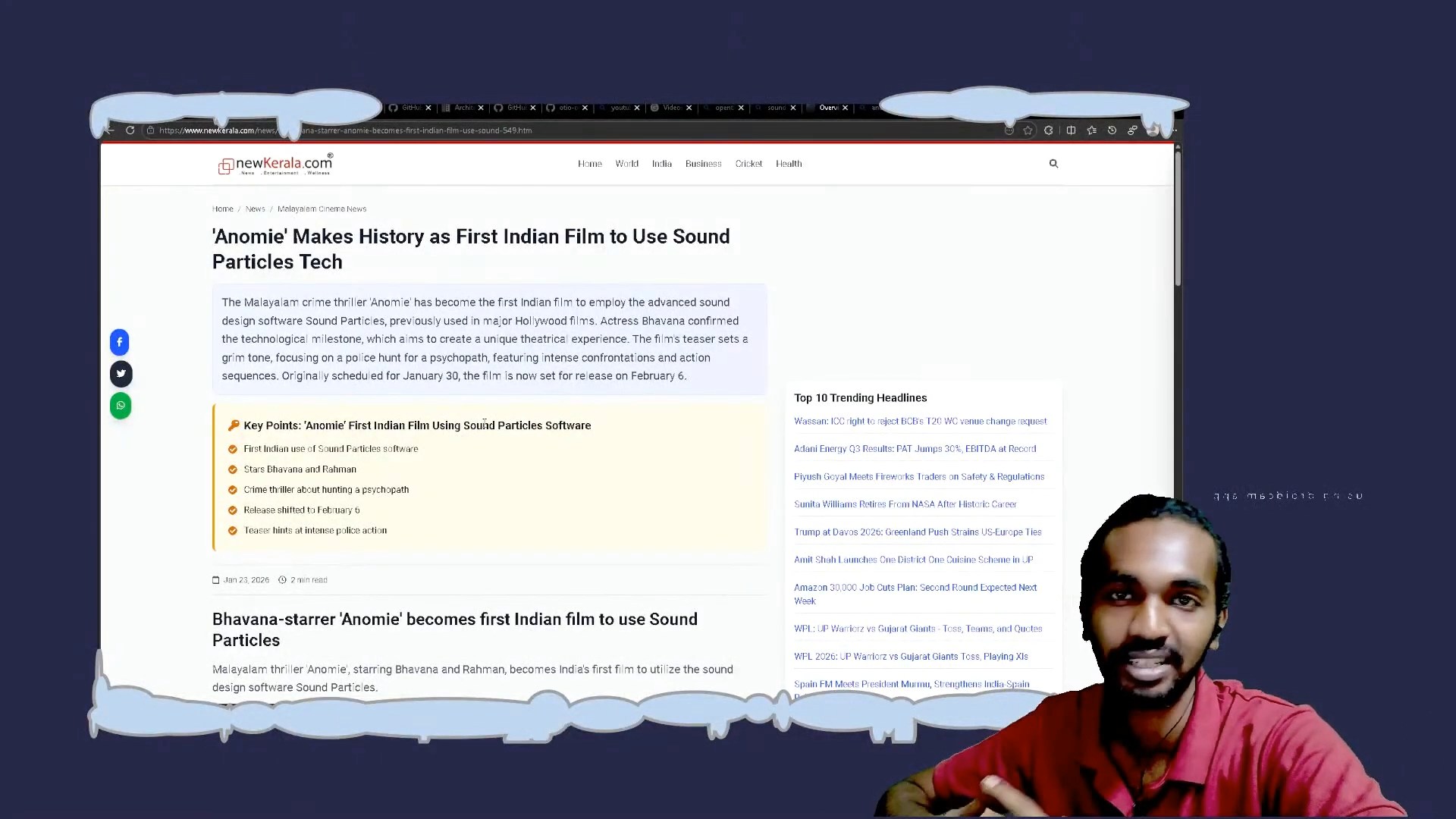
South Indian Malayalam Film ANOMIE uses Sound Particles in their Sound Production. Sound Particles is an application for Sound Production Professionals to work with Sound samples as seamlessly as possible. Their software guaranteed good UX and accessibility.
We were looking at file samples. Learning about how the EDL format is. We discovered the file assests that are being used in a film production.
We were thinking about creating an adapter for OpenTimelineIO. To be able to fetch Youtube videos (our past livestreams) and fill in the necessary metadata. And maybe use FFMPEG to do slicing edits, to be more resource efficient. The workflow I plan would be like create an OTIO (EDL) file that lists the clips needed. Then I could provide it to Kitsu. And when we are ready to work on a shot. Change the task type to Ready in Kitsu. Which would fetch the file using Youtube API, which is then handed over to the FFMPEG library to slice into clips and save locally in the edit folder.
We were looking at file format of OTIO. How studios are able to use it. We are using EDL (on progress). And actual Studios used XML.
The actual studio asset files was discovered on Raven (OTIO viewer) app’s Github repository. Which provided the resources by Netflix (Open Assets)
I looked at different assets. But also focused on ADM. Which was the format that contained the metadata for sounds.
I wanted to know, how the recent interview I heard. About how a South Indian film Anomie, might have used it. The interview was with the South Indian Malayalam film actress Bhavana, who mentioned about Sound Particles being the audio tech their film’s sound production team used.
I visited the Sound Particles website and did a quick breakdown on how the system worked. In order for our Kitsu pipeline to be able to support sound related tasks in the future.
We also made a short/reel..!
| YouTube | |
|---|---|
|
|
I felt excited to watch Anomie. To evaluate & experience how a South Indian Malayalam film crew did the sound production.
If you’re working in sound production or a audio/sound enthusiast. I definitely recommend you to watch it in theaters and experience how a professional film crew are being benefited from using Sound Particles, to get you immersed in their creative production.
I am looking forward to get immersed & inspired in order to architect our own Kitsu pipeline with a realistic ADM format.
Basically, ADM is an Open Standard that uses Object Based Audio format. An Object Based Audio gives each sound its own set of metadata. These metadata tells the system exactly where a sound should be, how it moves, how loud it is. This allows the playback system to adapt to your mix to any type of speaker setup.